TERRY GROSS, HOST:
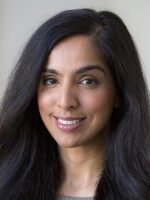
This is FRESH AIR. I'm Terry Gross. The HBO series "Hacks" is nominated for 24 Emmys. That's a record-breaking number for a comedy series in a single year. It finished its fifth and final season this past spring. Our guest is the show's star, Jean Smart. She spoke with guest interviewer Aarti Shahani. Aarti is a veteran NPR journalist, host of the podcast Art of Power and author of the memoir "Here We Are." Here's Aarti.
AARTI SHAHANI, BYLINE: Jean Smart is on the cusp of making TV history. The star of the hit show "Hacks" has been nominated again for outstanding lead actress in a comedy series. She won in that category for every previous season of "Hacks." The show is about two female comedians - one at the start of her career, the other, played by Jean Smart, at the purported end of hers. While they can't stand each other at first, they are also ravenously ambitious. That is what fuels a zany journey that becomes about the creative process, chosen family and finding love for a person whose worldview is antithetical to yours.
Today, "Hacks" star Jean Smart returns to FRESH AIR to talk about her iconic role as the character Deborah Vance and also her life's work. Smart has previously won Emmys for her performances on the shows "Frasier" and "Samantha Who?" Her first claim to fame was starring in the 1980s sitcom "Designing Women." She's performed in dramas like "Fargo, "Watchmen" and "Mare Of Easttown" and also on Broadway. She is a real unicorn in Hollywood - a mainstream female actor who has spent decades on the screen in many stories focused on women's relationships with each other, not with a man at the center.
Jean Smart, welcome back to FRESH AIR.
JEAN SMART: Thank you. Happy to be here.
SHAHANI: I want to start with one of my favorite episodes in all of TV history, and I've watched...
SMART: Oh, wow.
SHAHANI: ...A lot of TV.
SMART: (Laughter).
SHAHANI: Yes. Seriously. In Season...
SMART: Chuckles the Clown?
(LAUGHTER)
SHAHANI: You. You did it.
SMART: (Laughter).
SHAHANI: In Season 5 of "Hacks," your character, Deborah Vance, is preparing to do her big comeback show at Madison Square Garden. She gets it in her head that she just needs to wear this iconic beaded white jumpsuit that was worn by her comedy hero, Carol Burnett.
SMART: Right.
SHAHANI: The problem is that the current owner is another female comedian who is a lesbian.
SMART: (Laughter).
SHAHANI: And she and Deborah have bad blood, in part because Deborah has said some very homophobic things in the past to her. Now Deborah is trying to butter up the jumpsuit owner to get her to sell it. The owner lives in a dream home in Montecino with her super hot younger girlfriend. They've invited Deborah to come spend the weekend. Deborah shows up with her business partner and young protege, Ava Daniels. And once they arrive, Deborah tells Ava, oh. You're going to pretend to be my lesbian lover over the weekend so we can endear ourselves to the host and get the jumpsuit. Ava, who is queer herself, is furious. Let's hear the clip.
(SOUNDBITE OF TV SHOW, "HACKS")
HANNAH EINBINDER: (As Ava Daniels) Deborah, this is [expletive] insane. I am not pretending to be a lesbian couple with you.
SMART: (As Deborah Vance) I need that jumpsuit. Please. It means a lot to me. I guess it wouldn't be too bad to spend some time with the wife. Call me Chandler 'cause I want to [expletive] Monica. You're my girlfriend. Do not flirt with her and blow up my spot. You and I are in a committed loving relationship. You're sleeping in the tub.
EINBINDER: (As Ava Daniels) I am not sleeping in the tub, OK? You know what? If you want me to do this, you got to give me $1,000.
SMART: (Laughter).
SHAHANI: Your reaction, Jean Smart, the first time you read that scene?
SMART: (Laughter) Oh, I (laughter) - oh my God. It was - and it was funny - it was so clever because it was the first time in the entire series that we've seen Deborah completely at Ava's mercy and at a loss for words. She couldn't say anything to defend herself. So Ava just took full advantage and said and did all these dreadful things (laughter)...
SHAHANI: Yeah. It was...
SMART: ...All week.
SHAHANI: ...Such a great role reversal.
SMART: (Laughter) Oh my God.
SHAHANI: It was so much fun, that episode, for all of the reversal going on. I remember watching Deborah in Season 2, back when she was supposed to be entertainment on a lesbian cruise, and she just...
SMART: Oh.
SHAHANI: ...Offended everyone there.
SMART: (Laughter) Right. Got put off the ship.
(LAUGHTER)
SHAHANI: And then by Season 5, your character is kissing Ava on the lips.
SMART: Yeah. Yeah. Anything for a jumpsuit, I guess.
(LAUGHTER)
SHAHANI: In addition to the fashionista mandate, what's important about this evolving relationship between Deborah and lesbians?
SMART: (Laughter) Well, I was very pleased that - I mean, from what I read and what I heard - that a lot of our lesbian fans really enjoyed that episode, didn't feel like they were being catered to or pandered to or treated with disrespect and that they felt that it was truthful, but still sort of satisfied (laughter) whatever fantasies they might have had about Deborah and Ava. I just - I thought it was just written so cleverly and done so well, and Paul directed it brilliantly. And it was really fun.
SHAHANI: Yeah. For me, it's like this very interesting wish-fulfillment without...
SMART: (Laughter).
SHAHANI: ...Truly being the fulfillment.
SMART: Well, it's such an interesting relationship. And I don't think - I can't think of any other movie or TV show that has had a relationship like this one. It just is so nuanced and so deep and so - but also has been fraught with a lot of pain. I mean, that relationship was - it was mother-daughter. It was best friend. It was enemies for a while. It was respectful coworkers. I mean, it was - you know, and Deborah had such an unhealthy relationship with her daughter. I think that filled a huge hole in her life and a massive amount of guilt that she had about her daughter.
It's interesting because I was very - I mean, I was very close to both my parents. My dad was kind of, like, my favorite person in the world. And I think I always kind of got along with men easier than women. And I could see that in Deborah - is that she's had this gap in her life of feminine energy that Ava kind of disrupted and just thought, what is this? You know, who is this person? It's driving me crazy.
SHAHANI: I think you just named what was landing so deeply for me. It was that so many modern women actually have this - you know, we survive by, you know, forging alliances with men. And now you see her thriving with this growing feminine energy.
SMART: Absolutely.
SHAHANI: You and your co-star Hannah Einbinder, who plays Ava Daniels, have an interesting parallel in real life.
SMART: Yeah.
SHAHANI: You both, at the very beginning of your careers, got cast in hit shows about female friendships that went on for many seasons. Do you find yourself trying to mold Hannah in your image?
SMART: (Laughter) Oh my God. No.
(LAUGHTER)
SMART: And she wouldn't be remotely interested in that.
(LAUGHTER)
SMART: Yeah. No. She - and she's going to be so annoyed. It's like I - I tell her - every time I tell this next story, I always say, I'm never going to tell the story again, I promise, but can I tell it one more time? And then I - you know? It's when she was still in awe of me, which was years ago.
(LAUGHTER)
SMART: It was shortly after we started shooting the show, and I think she, you know, really listened to my advice and everything. But she came up to me, and she said, I just have to thank you because I heard you really, really went to bat for me, you know, when I auditioned. And I said, I told the producers, you know, I thought you had to be the one. And in fact, I said that if they didn't hire you, I wasn't going to do the show. And she looked at me and she said, really? I said, no.
SHAHANI: (Laughter)
SMART: What are you, nuts? What are you, crazy? And as it was coming out of my mouth, I thought, oh, Jean, I can't believe you're going to say this. You don't even know this girl.
SHAHANI: Oh.
SMART: I said, please laugh, please laugh. And, of course, she did. Thank God she laughed (laughter). I just couldn't resist (laughter).
SHAHANI: Aw. Let's take a break here, and we will talk some more. My guest is actor Jean Smart. She has won seven Emmys, including four for playing the comedian Deborah Vance on "Hacks." She's nominated again this year for outstanding lead actress in a comedy series for the show's fifth and final season. More after the break. This is FRESH AIR.
(SOUNDBITE OF MUSIC)
SHAHANI: This is FRESH AIR. I'm Aarti Shahani back with actor Jean Smart. She stars in the critically acclaimed show "Hacks." Her other shows include "Designing Women," "Frasier," "Fargo" and "Mare Of Easttown."
You know, of all the shows that you have starred in, I've heard you talk about "Fargo" with the most, I don't know, reverence or nostalgia. And in that series, you play Floyd Gerhardt, matriarch of the Gerhardt crime family.
SMART: Yes.
SHAHANI: After her husband has a sudden stroke, the question becomes, who is going to run the family business?
SMART: Right.
SHAHANI: Let's play a scene from "Fargo" Season 2 when you, as Floyd Gerhardt, are sitting at the dining room table with your son, Dodd, each jockeying for position. Let's play the clip.
(SOUNDBITE OF TV SHOW, "FARGO")
SMART: (As Floyd Gerhardt) Sit. Eat something.
(SOUNDBITE OF FOOTSTEPS CLUNKING)
SMART: (As Floyd Gerhardt) This moment, how things go in the next few weeks will decide...
JEFFREY DONOVAN: (As Dodd Gerhardt) That's why I...
SMART: (As Floyd Gerhardt) Let me finish. Your grandfather left the ashes of the Weimar Republic and came to this country to build a name for himself. He built an empire from a shoeshine box. And then, and only then, did he send for your father.
DONOVAN: (As Dodd Gerhardt) Ma, I know the story.
SMART: (As Floyd Gerhardt) No, you don't, 'cause if you did, you'd know that you are just a small part of it. That's what an empire is. It's bigger than any son or daughter. Eat.
DONOVAN: (As Dodd Gerhardt) I'm not hungry.
SMART: (As Floyd Gerhardt) I'm your mother. You'll eat with me. Your time will come. It will. But this isn't it. And if you stand by me now, I promise you that as soon as this crisis is over, I'll hand you your legacy and I'll turn my thoughts to the grave.
SHAHANI: Your reaction to that clip?
SMART: (Laughter) Oh, I'd forgotten about that scene. Yeah, that was a great scene. Noah Hawley is so brilliant, writer. But it was one of those parts where I had the same reaction when I read - I had a certain speech that he sent me to audition with. And I had the same reaction to it that I had when I first read the pilot script for Deborah Vance, for "Hacks."
SHAHANI: For "Hacks."
SMART: Was that, I just - I could hear this woman in my head. I knew exactly who she was, what made her tick. And the fact that she was named Floyd. And I never asked Noah why he named her Floyd because I just - I came up with my own theories, and I didn't want him to sort of disabuse me of that. But I did ask him when we were done.
Because I had come up with this whole backstory of how she - her father had always wanted a boy. And he was going to name him Floyd, come hell or high water. But he had a girl, named her Floyd anyway and taught her how to, you know, be a rancher and how to ride and how to shoot. How to hunt, how to be tough, how to - you know, everything that he would've taught his son, and that he named her Floyd. And so I asked Noah finally when our season was done. I said, why did you name her Floyd? And he said, oh, my wife has an aunt named Floyd - I just thought it sounded cool.
(LAUGHTER)
SMART: Oh, OK (laughter).
SHAHANI: Well, overthinking it helped you deliver it.
(LAUGHTER)
SMART: Yeah. But, I mean, that showed...
SHAHANI: Is that something you do a lot? Oh, sorry. Go ahead.
SMART: Not a lot. I mean, somewhat. I mean, when I was doing "24," the brilliant Gregory Itzin and I, who had actually done a play together years before - and so it was great fun to get back together with him. He and I - he was playing the president, and I was playing the first lady. And he and I came up with a little bit of a backstory about, did we ever have kids? And if we did, what happened, and where are they? And dah-dah, dah-dah, dah. And so we told one of the producers one day, and he just kind of looked at us like, oh, yeah, OK. That's nice. Do your little actor-y thing. That's nice. OK. It was like...
(LAUGHTER)
SHAHANI: Well, in playing Floyd the matriarch Mafia boss, how did you grow creatively in that role? It's such a great role.
SMART: I loved playing her. I would've loved to have played her a little longer. And it was so nice to be just rid of any kind of physical vanity - the clothing, the hair, no makeup, everything - and just be able to just do the work and not think about all the other superfluous stuff. Although I do remember - because I said to the hair gal, I said, I don't want to wear a wig. I want to be able to, like, grab my hair or touch it or whatever. I wanted to - I don't want to wear a wig. And I said, just cut my hair really short and put a brown rinse in it.
SHAHANI: Oh, that hairdo was your idea (laughter)?
SMART: Yeah. I said put a brown, mousy rinse in it and perm it or whatever. And she did. And I just remember I looked in the mirror, and I almost started to cry. But I went, that's her.
SHAHANI: (Laughter).
SMART: There she is. There she is. Yep, there she is.
SHAHANI: Wow, transcending vanity. That's great (laughter).
SMART: Yeah. Well, it's nice because you think, God, the men get to feel this way almost all the time, you know? They get out of the shower, run their hand through their hair. The makeup artists might powder them for a second, you know? And they get to just think about the work, not like, oh, God, how come you're lighting me like that? Or, oh, God, I have to hold my stomach in. Or, oh, God, I have this or that, you know? And it's - I've had a few roles like that. And it's so freeing.
But that was - and I was surrounded by such remarkable actors. I mean, I've had that experience on so many shows. I've been so lucky. But there was something about that show. I mean, every single human being on that set, in front of the camera or behind it, was on their A-game. And it was the most extraordinary experience, doing Noah's script.
SHAHANI: Let's rewind back to the very beginning, by which I mean 1692. You descend from a woman...
SMART: (Laughter) Oh.
SHAHANI: Aha. Yeah.
SMART: Oh...
SHAHANI: You descend...
SMART: ...My God.
SHAHANI: We - we're going to go there. You descend from a woman prosecuted in the Salem witch trials?
SMART: Yeah. My eight-times great grandmother. I can't believe you brought that up. As I was looking in my closet, I went, oh, what should I wear? I mean - and I didn't know if the studio was going to be cold or not. So I almost grabbed my 1692 hoodie.
SHAHANI: Oh my God.
SMART: I had my hand on it.
SHAHANI: Wow.
SMART: That's so weird. And it says, 1692 - they missed one.
(LAUGHTER)
SHAHANI: 'Cause she was not hung. Is that why it says that?
SMART: She was not. She was not.
SHAHANI: Tell us about her.
SMART: She missed being hanged by one day. She confessed, in quotes. And they think that she was actually very clever, and she noticed that people who confessed - it bought them some time because they wanted you to examine your soul and all this kind of stuff because, of course, nothing - back then, nothing they loved more than a repentant sinner. And people who didn't confess were hanged immediately.
But she was - what I found out about her was she was an eccentric gal, Grandma. And I think it was probably very, very easy to accuse her of being a witch. She had kind of gotten in trouble a couple of times, and she was now an older woman. And she had owned a book on fortune-telling, which back then was considered very suspect. She had also gotten in trouble because she and a couple of her daughters sort of had a little cat burglary ring in Beverly, Massachusetts, which is just outside of Salem. And her daughters would make friends with the maids of all the rich people in town and steal stuff for us (laughter).
And also, too, I found out - this wasn't on - it was not, though, on part of the show which I did, which was called "Who Do You Think You Are?" - the genealogy show. But I found out through Wikipedia and some other source that she had a lock of hair that was, quote, of another color. I'm assuming white. What other color could it be? And it was what they call an elflock, which, from what I've read, is like a - kind of like a dreadlock, where your hair has become matted and twisted. And it was 4 feet 7 inches long when they arrested her. And she can't have been taller than that...
SHAHANI: Wow.
SMART: ...I mean, at the time. And when they arrested her, they wanted to cut it. And she flipped out and said if they cut it off, she'd die. So she was an interesting person. And that certainly didn't...
SHAHANI: Clearly related to you.
SMART: Yeah. It (laughter) certainly didn't help her cause when she did that. But when I found that out, these tears just sprang to my eyes. I just thought - I couldn't believe my eyes. I was reading - they actually let me hold original transcripts from the 1600s. And I was reading her arraignment. And I saw those - when I first saw the words, witchcraft, I just couldn't believe it. And when they brought my grandmother into the room, these young women started screaming and pretending to faint. And it was - and you could tell at first she was frightened. But then she started to get angry, and they had to tell her to kind of calm down.
But it was weird because I thought, am I having some kind of weird past-life regression? Because the names were familiar to me, and I'm thinking, OK. This is really crazy. It was, like, right out of a scene from "The Crucible," that famous play by Arthur Miller about the trials. And then I realized that, of course, Arthur Miller, when he was writing that play - he had access to all the same history that I was being given by these historians and genealogists. But it was just bizarre. It was just...
SHAHANI: Wow.
SMART: It was just crazy.
GROSS: We're listening to guest interviewer Aarti Shahani's conversation with Jean Smart. Smart won Emmys for outstanding lead actress in a comedy series for the first four seasons of the hit series "Hacks." She's nominated again for "Hacks'" fifth and final season. We'll hear more of their conversation after a break. I'm Terry Gross, and this is FRESH AIR.
(SOUNDBITE OF MUSIC)
GROSS: This is FRESH AIR. I'm Terry Gross. Let's get back to the conversation guest interviewer Aarti Shahani recorded with actor Jean Smart.
Smart stars in the HBO series "Hacks," about two female comedians played by Smart and comedian Hannah Einbinder, who form a close bond despite being at completely different stages in their lives and careers. "Hacks" concluded its fifth and final season this past spring and is now nominated for 24 Emmys, breaking the record for most nominations received by a comedy series in a single year. In its first four seasons, Smart won Emmys for outstanding lead actress in a comedy series, and she's nominated again this year.
Jean Smart's first claim to fame was starring in the 1980 sitcom "Designing Women." Since then, she's appeared in a number of shows, including "Fargo," "Watchmen" and "Mare Of Easttown," and she's performed on Broadway.
SHAHANI: You met the love of your life, Richard Gilliland, on the set of "Designing Women."
SMART: Yes.
SHAHANI: And I want to ask about him first. How did you know that Richard was the one?
SMART: It was just an instant thing. It really was. It was just instant. The day we met, we were never apart after that. And he just - I mean, I don't know. I mean, nobody made me laugh the way he did. He was so warm and so easy to talk to and so funny. And I just - I remember I walked into this building over at Warner Bros. We were getting ready to do a table read of Episode 5. And the show had never aired yet. We weren't on the air yet. And we were shooting it, the fifth episode.
And I looked up the stairwell, and I saw this guy talking to somebody. And I recognized him. I'd seen him on television. I didn't know his name, but I thought, I know - I've seen that guy before, but I just - he had these great little smile lines. And he just - I just - he just looked so - and I thought, oh, I wonder if he's here to be on our show, 'cause there were other productions in the building. And yeah, there he was. And so I walked in the room, and there he was, sitting across from me. And yeah, it was just instant.
And I started inviting him into my trailer to play, do crossword puzzles. And then he invited me to see a play that he was in, which was pretty bad, but he was absolutely hysterical in it, and I went about 12 times, and...
SHAHANI: Aw. You guys were married for 35 years, which seems like a very rare thing in Hollywood.
SMART: Yeah, it was half my life. Yeah.
SHAHANI: Yeah. How'd you manage to stay married together for that long?
SMART: Well, yeah. I mean, I don't know if the - I don't know what the statistics are compared to other professions. I don't think they're probably drastically different. But I do think that, at least for actors, you're constantly meeting attractive, interesting people and different people all the time. All the time, you're exposed to different people. And sometimes you're out of town working with these attractive, interesting people who are all kind of at their most attractive and interesting 'cause they're working, you know? (Laughter) And so that can be, of course, very hard on a marriage. But like I said, we had similar values. We'd both been married before. And again, I mean, it just - I don't know. It's the - nobody made me laugh like him.
SHAHANI: His career, as I understand it, took a bit of a back seat so that the family could focus on your career. Was that an easy or difficult decision?
SMART: No, it was difficult. It wasn't really a decision. It kind of just evolved that way, and it was - it didn't - it was difficult. It was hard on him, which I understand. And, you know, he - both of us, you know, grew up in the '50s, where it was traditional family values and traditional role models. So that was - it was difficult. And we actually separated for a year. And that was excruciating, but it was also - probably ended up being a good thing because I really - I think I really understood what wedding vows meant. I was very humbled by the fact that Richard did not ever give up on us, and I had. And I felt - I feel bad about that, that I put him through that. But he always believed that somehow we'd get back together, and we did.
I think that that next Christmas after we got back together, we were having a Christmas party, and a friend of ours was there who had recently been ordained so he could marry some other friends of ours. And I said, hey, Greg's here, let's renew our vows. And he said, oh, great. And so we hadn't told anybody. We just - it was just sort of a spur of the moment thing. And so, my son, who was about 8, 9, then - he and his buddy - I said, set up some chairs, you know?
And so he started he and his friends started setting up rows of chairs. And people thought, oh, God, Jean and Richard are going to put on a little show or something, you know? I don't know what they thought. Ae, I was wearing I was just wearing a pair of black pants and a leopard print sweater. And he had on a Hawaiian shirt and jeans. And I said, well, this won't do, you know (laughter)? So I went and I got some fake flowers, and I put them in my hair, and he went and got his tuxedo jacket and put it on over his Hawaiian shirt.
SHAHANI: Aw.
SMART: I'm sure we looked ridiculous. And...
SHAHANI: Super cute.
SMART: And we just said what was in our hearts and how grateful we were to be back together, and it was great.
SHAHANI: One more question about your personal life. You gave birth to your first child when you were 37, 38, the - what they call the advanced maternal age.
SMART: Thirty-eight, yes.
SHAHANI: Thirty-eight.
(LAUGHTER)
SHAHANI: And then at age 57, you adopted a baby?
SMART: Yes.
SHAHANI: Explain that.
SMART: (Laughter) Well, we knew two couples who had adopted babies from China and just - and I had I wanted to have another child, but it just wasn't in the cards, and I had a miscarriage, and that was really painful. And I just thought, I really want another baby. And so we started talking about it, and Richard would always say, oh, no, no, we're too old, we're too old. And by the time we finally did it, we probably were, but it was like...
(LAUGHTER)
SMART: It took me - it took so many years to talk him into it. You know, and at one point, we were actually going to start the paperwork, but then my father was diagnosed with Alzheimer's, and I just - I couldn't deal with it. We kind of - so I kind of put it on the back burner for a while. But then we started again. But unfortunately, that was right when China was hosting the Olympics, I believe, and everything just slowed down to a snail's pace. So it took about five years once we started doing the paperwork. And the paperwork was overwhelming. It was just endless. It was just endless.
SHAHANI: Wow.
SMART: It was worth it, but it was - took a long time. But, you know, at that age, I felt like I peaked in my 50s. I felt like I could do anything. And it was just a thrill. And it was so cool because when they place that baby in your arms, you realize in that split second that it doesn't matter that you gave birth to that child or not. It's like - it just - it was just instant. It's like that - think of this (ph), I'm going to love you and protect you, you know, for the rest of my life. And it was just really cool.
And - but it was a little - I was kind of dismayed that so many of our friends, most of them really seemed to disapprove when I told them what we were going to do. And - but when we brought the baby home (laughter), all my girlfriends were just so jealous. They were like, oh my God. Oh my God. And all the husbands were like, thanks a lot, Richard. Jesus, she hasn't stopped talking about this.
(LAUGHTER)
SHAHANI: My guest is actor Jean Smart. She has won seven Emmys, including four for playing the comedian Deborah Vance on "Hacks." She's nominated again this year for outstanding lead actress in a comedy series for the show's fifth and final season. More after the break. This is FRESH AIR.
(SOUNDBITE OF QUEEN LATIFAH SONG, "FLY GIRL")
SHAHANI: This is FRESH AIR. I'm Aarti Shahani, back with actor Jean Smart. She stars in the critically acclaimed show "Hacks." She's won four Emmys for her role and has been nominated again this year for outstanding lead actress in a comedy series. Her other shows include "Designing Women," "Frasier," "Fargo" and "Mare of Easttown."
OK, this last part of our conversation is a spoiler for anyone who has not seen Hack Season 5. So you have officially been warned. In the last episode of the season, Deborah Vance and her young sidekick, Ava Daniels, are in Paris. Deborah has been diagnosed with cancer, is refusing treatment and wants to go out on her own terms. So Paris is supposed to be their last rendezvous before Deborah checks herself into a European center for assisted suicide. In this scene, they are at the train station, waiting for their train, eating. Let's hear the clip.
(SOUNDBITE OF TV SHOW, "HACKS")
EINBINDER: (As Ava Daniels) So what are you going to ask if you get to, you know, meet your maker?
SMART: (As Deborah Vance) My plastic surgeon?
EINBINDER: (As Ava Daniels) Ha. No, really.
SMART: (As Deborah Vance) In 1980, Burt Reynolds called me, and I called him back, but he never returned. What was that about?
EINBINDER: (As Ava Daniels) That's what you want to know?
SMART: (As Deborah Vance) I pretty much have everything else figured out. In fact, I think he or she or, you know, they-them might have some questions for me, actually.
EINBINDER: (As Ava Daniels) They-them. OK. Nonbinary God. Love.
SMART: (As Deborah Vance) I meant more of an energy. I don't think there's going to be a gender fluid barista waiting for me at the Pearly Gates.
EINBINDER: (As Ava Daniels) It's too bad. I'd love a matcha when I get there.
(LAUGHTER)
SMART: (As Deborah Vance) Hey, are you done with that?
EINBINDER: (As Ava Daniels) Yeah, yeah, go for it. Wow. I guess the best part of dying for a person with disordered eating is having a second croissant.
SMART: (As Deborah Vance) Actually, the best part of dying is not having the save receipts because you know you will never get audited again.
EINBINDER: (As Ava Daniels) Actually, I think the best part of dying is knowing how pissed people are going to be when they realize how much money you left your dogs.
(LAUGHTER)
SMART: (As Deborah Vance) But the worst part of dying is that I don't get to see how my corgis decide to spend that 550,000.
(LAUGHTER)
SHAHANI: What do you think of that scene?
SMART: (Laughter) Yeah, that was a great scene - Burt Reynolds. You know, it was so - it was very much in character, you know, for Deborah to make that decision to do that.
SHAHANI: You know, you were mentioning earlier you think that Deborah's character really unfolds over the course of the series. And how would you summarize what that evolution is?
SMART: I think she just becomes so much more relaxed, you know? She's made peace with her daughter, even though it was kind of an unpleasant peace in the sense that she realized she was never going to be able to repair that relationship, that it was never going to be what it should have been. And that's a hole that Ava fills to a certain extent. So she's kind of been making peace with people, even before she realized that she was sick.
It's like she's relaxing in her life a little bit, and she's allowing Ava to sort of, you know, sometimes take control or give her some advice. And when she stands up to Bob Lipka, played by the wonderful Tony Goldwyn, that's a huge thing for her - very freeing, very freeing. And she's thinking, screw it. I don't need Madison Square Garden. I don't need the money from the ticket sales. I just want to talk in front of people who want to hear me talk. And so just get me a stage in the park. Let anybody who wants to come come. You know, you never - she wouldn't have done that Season 1 or 2, you know?
SHAHANI: Is Deborah Vance and "Hacks" a creative challenge for you or more like the easy reward after a lifetime of challenges?
SMART: There weren't things like I didn't, you know - 'cause there was a slight accent involved with Floyd, which was - adds, you know, another layer that you need to work through so you can get to - you can just stop thinking about it and let it just come naturally. That's another sort of added challenge.
But they were both emotionally demanding, but in very different ways, you know? They were similar in the way - in the sense that they both were - kind of held a lot of their feelings in, you know? But the thing about Deborah was it's just so fun to make people laugh, and just to see how people responded to the show was such a thrill. And she got to be just more and more three-dimensional, more and more human and less guarded as time went by, which was really nice.
SHAHANI: You know, Jean, you are kind of making a case for me, all right (laughter)?
SMART: OK.
SHAHANI: I wanted to have this conversation.
SMART: (Laughter).
SHAHANI: I wanted to have this conversation with you for a little bit of a hidden agenda, OK?
SMART: OK.
SHAHANI: Which is that, yes, you all say "Hacks" is over. Season 5 was the last season. But I think it's the wrong call. I don't get why.
SMART: (Laughter) Well, it was written as a five-year show from Day 1. They had every season already in their heads, written in their heads, if not already written from years before they even met me. That's how they sold it. That's how they pitched it to me. That's how they pitched it to the network. They felt that it ended in an appropriate way. Course, they had no way of knowing how big the show was going to become. And I felt that I was ready to move on from the character. So it all kind of jelled nicely.
SHAHANI: I know you're OK with it being over. But just, if I - one more question I think about is, how are you feeling now that you are a little bit away from the filming of it?
SMART: Well, I'm not missing getting up at 4 in the morning and wearing high heels all day.
(LAUGHTER)
SMART: If - I don't know if you noticed, but the heels got shorter and shorter as the seasons went.
(LAUGHTER)
SMART: I wore some killer heels Season 1 that I couldn't wear today. The thing is, though, unlike the - our darling crew, who had to kind of rip off the Band-Aid, for us in the cast, particularly Hannah and I - we have an entire awards season coming up. So we're going to still be living with the show, talking about the show, doing interviews about the show, going to ceremonies and things through next February. So after that, it might feel a little more real.
SHAHANI: Well, Jean Smart, thanks for joining us.
SMART: Thank you so much.
GROSS: Jean Smart spoke with guest interviewer Aarti Shahani. The fifth and final season of "Hacks" is nominated for 24 Emmys, including one for Smart for best actress in a comedy series. Aarti is a veteran NPR journalist, host of the podcast Art of Power and author of the memoir "Here We Are." Coming up, Maureen Corrigan reviews a new novel by Daniel Mason, who she says has a magic touch as a writer. This is FRESH AIR.
(SOUNDBITE OF MUSIC) Transcript provided by NPR, Copyright NPR.
NPR transcripts are created on a rush deadline by an NPR contractor. This text may not be in its final form and may be updated or revised in the future. Accuracy and availability may vary. The authoritative record of NPR’s programming is the audio record.